
News
The main products are food additive microcrystalline cellulose, food additive magnesium stearate, food additive sodium carboxymethyl starch, food grade magnesium stearate, food grade sodium carboxymethyl starch microcrystalline cellulose, Magnesium stearate, sodium carboxymethyl starch, pregelatinized starch, starch, dextrin, etc.
02
2022
-
03
Some related knowledge about medicinal starch
Medicinal starch, when placed as a dilute paste for a certain period of time, will gradually become turbid and produce insoluble white precipitate. In a thick paste-like state, it can form an elastic colloid, which is called starch retrogradation, also known as starch aging or retrogradation swelling capacity.
Pharmaceutical starchWhen placed in a dilute slurry for a certain period of time, it will gradually become cloudy and produce insoluble white precipitate. In a thick paste-like state, it can form an elastic colloid, which is called starch regeneration, also known as starch aging or regeneration expansion ability.
When pharmaceutical starch is heated,Pharmaceutical starchthe granules will swell. Different types of starch have different granule swelling capacities. A starch milky sample is heated in a water bath at a certain temperature for 30 min, then centrifuged, the supernatant is poured out, and the precipitated granules are weighed. The ratio of the weight of the swollen starch precipitate to the weight of the original dry starch is called the critical concentration of swelling capacity.
The critical concentration of pharmaceutical starch refers to the dry weight of 100 mL of water without free water after the starch is swollen at 95℃. When the concentration of starch exceeds the critical value, the pharmaceutical starch will form a continuous phase of swollen granules.
The product is taken out from the drying loss, dried at 130℃ for 90 minutes, and the weight loss shall not exceed 13.0% (General Rule 0831). Take 1.0 g of the ash of this product, check according to the method (General Rule 2302), and the residue shall not exceed 0.5%. Take 1.0 g of iron, place it in a stoppered conical flask, add 4 ml of hydrochloric acid and 16 ml of water, shake vigorously for 5 minutes, filter, wash with an appropriate amount of water, combine the filtrate and washings in a 50 ml Nessler colorimetric tube, add 50 mg of ammonium persulfate, dilute with water to 35 ml, and check according to the method (General Rule 0807). Compared with the control solution prepared with 1.0 ml of standard iron solution, it should not be deeper (0.0 Take 1.0 g of arsenic salt, add 21 ml of water, boil, cool, add 5 ml of hydrochloric acid, check according to the method (General Rule 0822), it should meet the requirements (0.0002%).
SolubilityPharmaceutical starchSensitivity to iodine: Take 2.5 ml of the sample solution under the clarity test, add 97.5 ml of water and 0.50 ml of iodine titrant solution (0.005 mol/L), shake well, the solution should be pure blue or purplish red. After adding 0.50 ml of sulfur titrant solution (0.01 mol/L), the blue color of the solution should disappear. Place the cooled test solution under the clarity test, determine the pH value according to the method (General Rule 0631), and the pH value should be 6.0 ~ 7.5. Clarity of solution: Take 1.0 g of this product, add 5 ml of water, stir evenly, heat 95 ml of water, boil for 2 min, check according to the method (General Rule 0902), the solution should be clear; if there is turbidity, immediately compare it with No. 3 turbidity standard solution (General Rule 0902), it should not be more concentrated. Weigh 10.0 g of reducing substance, add 100.0 ml of water, shake evenly for 15 minutes, stand for 12 hours, filter with a G4 glass crucible, take 50.0 ml of secondary filtrate, add 50 ml of alkaline copper tartrate solution, boil for 2 minutes, filter with a constant weight G4 glass crucible, wash the precipitate with water until the washing solution is neutral, then wash with ethanol and each 30 ml, dry at 105℃ to constant weight. Residual oxidizing substance: Take 4.0 g of this product, place it in a stoppered conical flask, add 50.0 ml of water, stopper, shake evenly for 5 min, transfer to a 50 ml stoppered centrifuge tube, centrifuge until clear, take 30.0 ml of the supernatant, place it in an iodine bottle, add 1 ml of glacial acetic acid and 1.0 g of potassium iodide, stopper, shake evenly, protect from light for 30 min, and titrate with sulfur titrant solution (0.002 mol/kg)
Related News

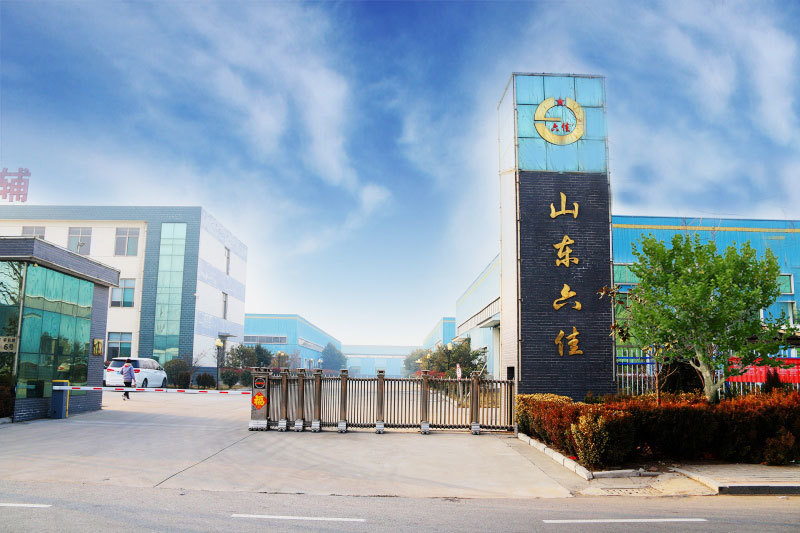
Shandong Liujia Pharmaceutical Accessories Co., Ltd. Our company was established in 1997, specializing in the production of pharmaceutical accessories. Our main products are microcrystalline cellulose, magnesium stearate, sodium carboxymethyl starch, pregelatinized starch, starch, dextrin, etc.


Address: Yandian Town Industrial Cluster, Yanzhou District, Yanzhou City, Jining City, Shandong Province, China


©2025 Shandong Liujia Pharmaceutical Excipients Co., Ltd
| SEO| Website construction:CEGLOBAL Business License Privacy Policy