
News
The main products are food additive microcrystalline cellulose, food additive magnesium stearate, food additive sodium carboxymethyl starch, food grade magnesium stearate, food grade sodium carboxymethyl starch microcrystalline cellulose, Magnesium stearate, sodium carboxymethyl starch, pregelatinized starch, starch, dextrin, etc.
21
2022
-
06
Entering the world of pharmaceutical excipients - microcrystalline cellulose
For example, starch, a commonly used excipient in China, is being used less and less in the developed pharmaceutical markets of Europe and America due to its insufficient performance. It is being replaced by superior excipients such as microcrystalline cellulose and lactose. With the implementation of consistency evaluation policies, pharmaceutical industry standards are fully aligned with international standards, and the application structure of excipients will inevitably follow the pace of developed countries. This poses a huge challenge to the domestic pharmaceutical excipient industry.
Auxiliary materials play a key role in the development of drug formulations and are one of the key factors determining drug quality. With the implementation of China's consistency evaluation policy for generic drugs' quality and efficacy, high-quality pharmaceutical auxiliary materials that meet international pharmaceutical standards and stability performance have become the focus of China's pharmaceutical industry.
Due to historical reasons, domestic pharmaceutical formulation technology is relatively behind that of developed countries in Europe and the United States. As an important link, pharmaceutical excipients not only have gaps in the quality and performance of the excipients themselves, but also many gaps in the application of pharmaceutical excipients by R&D personnel. For example, starch, a commonly used excipient in China, is used less and less in the developed pharmaceutical technology regions of Europe and the United States due to its insufficient performance, and it is replaced byMicrocrystalline Celluloseexcipients with superior performance, such as lactose. With the implementation of the consistency evaluation policy, the pharmaceutical industry standards are fully aligned with international standards, and the application structure of excipients will inevitably follow the pace of developed countries, which is a huge challenge for the domestic pharmaceutical excipient industry.
Microcrystalline cellulose is a solid product with a crystal lattice characteristic, separated from natural cellulose. The main component is a linear polysaccharide, linked by β-1 and 4-glucosidic bonds. Its shape is very fine short rods or powdery porous particles that can flow freely. It is white or off-white, odorless, and insoluble in water, dilute acids, organic solvents, and oils. Microcrystalline cellulose has the following basic characteristics:
First, chemical stability.
Microcrystalline cellulose has stable properties and is resistant to high temperatures, high humidity, and strong light irradiation.
Second, biosafety.
BecauseMicrocrystalline Celluloseit comes from natural plants, it is the same as the cellulose component people usually ingest, relatively non-toxic, and non-irritating. It is insoluble in water and dilute acid, is not absorbed orally, and has no biological activity.
Microcrystalline cellulose is widely used in the pharmaceutical, food, cosmetic, and light chemical industries, based on the above two basic characteristics, low degree of polymerization, and large specific surface area.
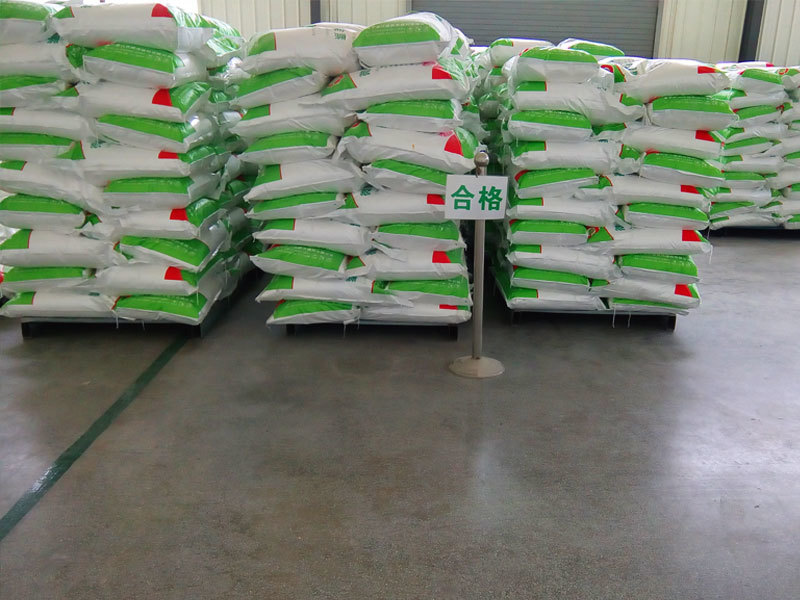
Applications of Microcrystalline Cellulose:
1. Application in the pharmaceutical and health product industry.
Because microcrystalline cellulose is biologically inert, it is widely used as a pharmaceutical excipient in the pharmaceutical industry:
Because hydrogen bonds exist between microcrystalline cellulose molecules, they bond together under pressure, so they have high compressibility and are often used as a binder to improve the hardness of tablets.
Due to its strong water absorption and expansion properties, it can be used as a disintegrant for tablets.
It can be used as a filler in drug formulations because it is biologically inert.
Microcrystalline cellulose can form a stable dispersion system in water, so it can be used as a suspending agent for oral liquids.
Due to its porous crystal lattice structure, it can be used as a drug carrier to play the role of a sustained-release agent.
Microcrystalline CelluloseIt can improve the stability of drugs. When mixed with some drugs that are easy to oxidize and deteriorate, it can improve their stability and prolong the shelf life. 2. Application in the cosmetics industry.
Microcrystalline cellulose colloid can not only reduce the amount of oil used but also replace mineral oil, lanolin, beeswax, etc., to make ointments or emulsions.
Microcrystalline cellulose has good self-lubricating properties and can replace talcum powder added in cosmetics, reducing the harm of carcinogens (asbestos) contained in talc to the human body.
Third, applications in the food industry.
Microcrystalline cellulose, as a safe and reliable food additive, has been recognized by the Joint FAO/WHO Expert Committee on Food Additives and the World Health Organization, and has been approved by the Chinese Food Additives Committee:
Because it has emulsification stability, it is used as a stabilizer, such as in yogurt and cream, to maintain its emulsified state.
During high-temperature sterilization, after adding microcrystalline cellulose, it has high-temperature stability, and the food that needs sterilization can maintain its quality stability.
Because it can form a stable dispersion system in water, it can be used as a suspending agent for beverages, making instant beverages quickly form a stable suspension after rinsing.
In baked foods, cheese, mayonnaise, etc., as a non-nutritive filler and thickener, it can replace high-calorie syrups, oils, etc., improving the structure of food.
As an anti-caking agent, the formation of ice crystals can control the formation of ice cream and other frozen desserts, improving the taste of food.
It can be used as the same high-fiber component as people usually ingest, so it can be used as a base material for functional dietary fiber foods such as dietary fiber biscuits and high-fiber bread.
Foods containing microcrystalline cellulose, due to its special stabilizer effect, can be stored for a long time, thus greatly promoting the development of the food industry.
Previous Page
Related News

Shandong Liujia Pharmaceutical Accessories Co., Ltd. Our company was established in 1997, specializing in the production of pharmaceutical accessories. Our main products are microcrystalline cellulose, magnesium stearate, sodium carboxymethyl starch, pregelatinized starch, starch, dextrin, etc.


Address: Yandian Town Industrial Cluster, Yanzhou District, Yanzhou City, Jining City, Shandong Province, China


©2025 Shandong Liujia Pharmaceutical Excipients Co., Ltd
| SEO| Website construction:CEGLOBAL Business License Privacy Policy