
News
The main products are food additive microcrystalline cellulose, food additive magnesium stearate, food additive sodium carboxymethyl starch, food grade magnesium stearate, food grade sodium carboxymethyl starch microcrystalline cellulose, Magnesium stearate, sodium carboxymethyl starch, pregelatinized starch, starch, dextrin, etc.
20
2023
-
02
What are the characteristics of microcrystalline cellulose?
What are the characteristics of microcrystalline cellulose? Microcrystalline cellulose is obtained by hydrolyzing plant cellulose. The approximate process is: dilute inorganic acid solution hydrolysis of α-cellulose, where α-cellulose can be made from cellulose pulp of cellulose plants.
Microcrystalline celluloseWhat are its characteristics?
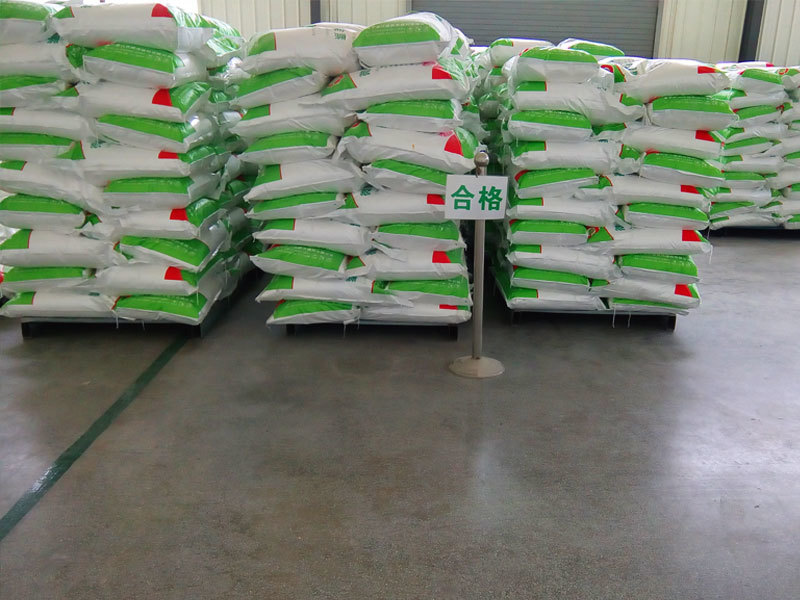
Microcrystalline cellulose is obtained by hydrolyzing plant cellulose. The approximate process is: dilute inorganic acid solution hydrolyzes α-cellulose, where α-cellulose can be made from cellulose pulp of cellulose plants. The hydrolyzed cellulose is filtered, purified, and the slurry is spray-dried to form porous particles with a wide particle size distribution.
User experience:
(1) The application characteristics of microcrystalline cellulose in solid preparations are its high compressibility. Compared with other solid pharmaceutical excipients, this is because there are hydrogen bonds between microcrystalline cellulose molecules, which combine during pressing, thus exhibiting high compressibility and improving the hardness of tablets. Therefore, it is often used as a dry binder; at the same time, when the pressed tablets encounter liquid, water quickly enters the tablets containing microcrystalline cellulose, the hydrogen bonds immediately break, so it can also be used as a disintegrant. Therefore, it is widely used in tablet production.
(2)Microcrystalline celluloseIt has a high water absorption capacity. On the one hand, it has good slurry absorption capacity in wet granulation, and there is sufficient space for the use of binders/wetting agents, or other functional auxiliary materials can be added to the binder, so the operation is more controllable; on the other hand, the wettability is good. In the wet granulation process, it can improve the uniformity of material wettability, which is conducive to the uniformity of granulation and the content uniformity of the final product; third, the high water absorption of microcrystalline leads to the strong hygroscopicity of the preparation. The moisture absorption weight gain of pure microcrystalline is greater than 5% at RH 75% for 5 days and exceeds 10% at RH 92.5% for 5 days. Therefore, when the proportion of microcrystalline in the prescription is high, attention should be paid to hygroscopicity stability. Under conventional storage conditions, the water content of microcrystalline is generally around 3%~5%, which is relatively stable;
(3) The secondary compression formability of microcrystalline cellulose is poor, while lactose is relatively good;
(4) Because microcrystalline cellulose is insoluble in water, the phenomenon of "bottoming out" will occur during dissolution, that is, microcrystals will accumulate at the bottom of the dissolution cup in the later stage of dissolution, leading to incomplete API release. Therefore, for insoluble drugs, the proportion of microcrystalline is generally recommended not to exceed 30%. If the bottom is found, the proportion of microcrystalline can be reduced, or the dissolution speed can be increased (50 75 rpm)
(5) In different types of microcrystalline cellulose systems, the overall balance is that the better the fluidity, the lower the formability.
6) Some comrades in the park mentioned, "usingMicrocrystalline celluloseThe blank tablets pressed will decompose quickly in water, but they decompose severely in acid." This principle is explained as "cellulose will be hydrolyzed in acid to form a water-soluble monosaccharide solution layer, the dissolution pressure generated by the formation of the monosaccharide solution layer will slow down the rate of water penetration to the core, and the viscosity of the monosaccharides produced by cellulose hydrolysis will further inhibit its water absorption and swelling"
(7) Another comrade mentioned, "When using water-based coatings, try to avoid using MCC, because most film coatings are water-based (such as aqueous dispersions)." Alcohol-soluble coatings are rarely used as coatings. Microcrystalline cellulose is easy to absorb water, soften and swell, so it is not suitable for tablet coating. I once made a kind of tablet, the prescription contained about 20% microcrystalline cellulose, and coated with water dispersion. Although I explored many coating conditions, I still couldn't get rid of the problem of unilateral expansion and cracking, and I had to use other auxiliary materials."
Previous Page
Previous Page
Related News

Shandong Liujia Pharmaceutical Accessories Co., Ltd. Our company was established in 1997, specializing in the production of pharmaceutical accessories. Our main products are microcrystalline cellulose, magnesium stearate, sodium carboxymethyl starch, pregelatinized starch, starch, dextrin, etc.


Address: Yandian Town Industrial Cluster, Yanzhou District, Yanzhou City, Jining City, Shandong Province, China


©2025 Shandong Liujia Pharmaceutical Excipients Co., Ltd
| SEO| Website construction:CEGLOBAL Business License Privacy Policy