
News
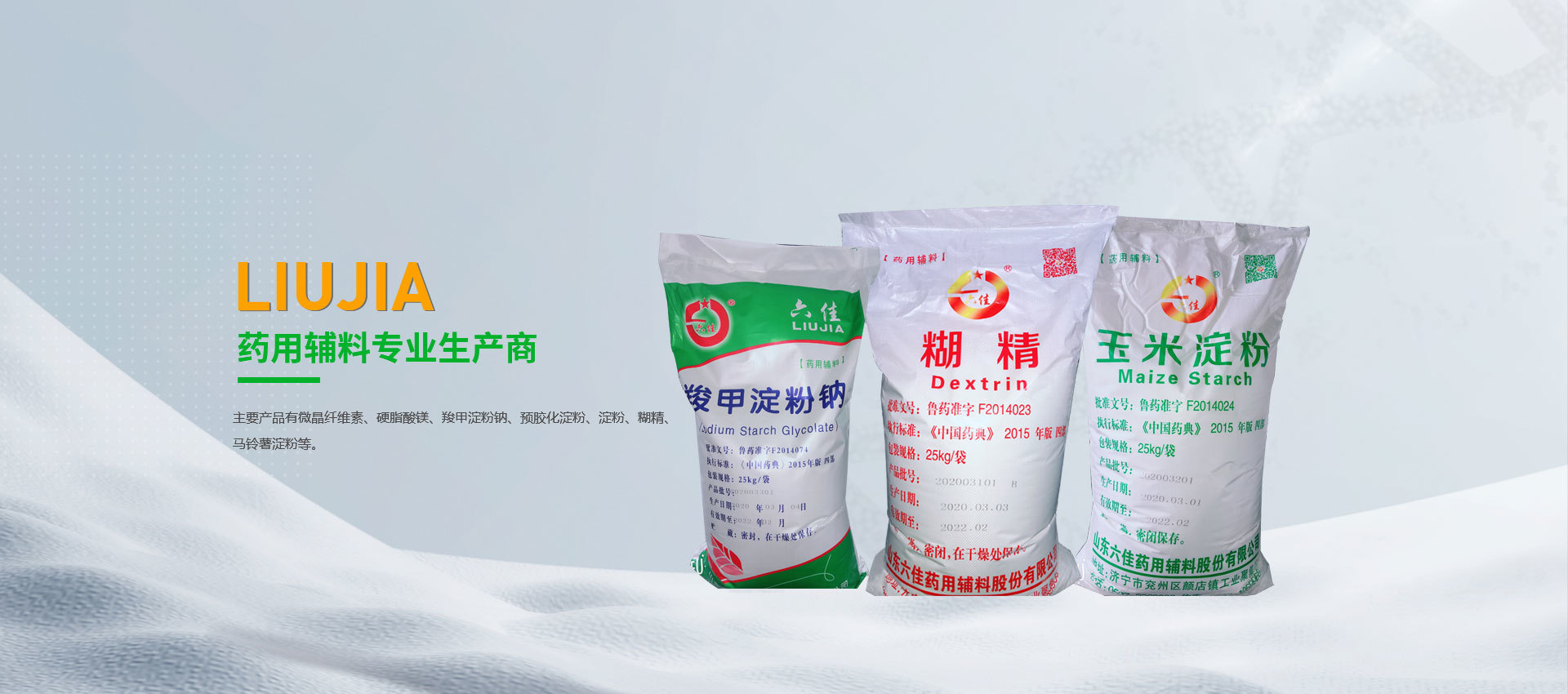
The main products are food additive microcrystalline cellulose, food additive magnesium stearate, food additive sodium carboxymethyl starch, food grade magnesium stearate, food grade sodium carboxymethyl starch microcrystalline cellulose, Magnesium stearate, sodium carboxymethyl starch, pregelatinized starch, starch, dextrin, etc.
27
2020
-
10
Advantages of thickeners
Cellulose thickeners have high thickening efficiency, especially for thickening aqueous phases. There are few restrictions on coatings and coatings, and they are widely used. Moreover, the available pH range is large. However, there are drawbacks such as poor leveling, more splashing during roller coating, poor stability, and sensitivity to microbial degradation.
CelluloseThickening agentIt has high thickening efficiency, especially for thickening aqueous phases. There are few restrictions on coatings and coatings, and it is widely used. Moreover, a wide pH range is available. However, there are drawbacks such as poor leveling, more splashing during roller coating, poor stability, and sensitivity to microbial degradation.
Because it has low viscosity under high shear and high viscosity under static and low shear, the viscosity increases rapidly after the coating is completed, which can prevent sagging, but on the other hand, it can cause poor leveling. Studies have shown that as the relative molecular weight of the thickener increases, the splashing of latex coatings also increases. Cellulose thickeners are prone to splashing due to their large relative molecular weight.
ThisThickening agentIt achieves thickening effect through "fixed water", and hardly absorbs pigments and latex particles. The volume expansion of the thickener fills the entire aqueous phase, squeezing the suspended pigment and latex particles to one side, which easily causes flocculation, thus resulting in poor stability. Because it is a natural polymer, it is easily attacked by microorganisms.
Polyacrylic acidThickening agentPolyacrylic acid thickeners have strong thickening properties and good leveling properties, good biological stability, but are pH sensitive and have poor water resistance. Under the action of shear force, the associative structure of the associative polyurethane thickener is destroyed, and the viscosity decreases. When the shear force disappears, the viscosity can be restored, which can prevent sagging during construction.
And its viscosity recovery has a certain hysteresis, which is beneficial to the leveling of the coating. The relative molecular weight of the polyurethane thickener (thousands to tens of thousands) is much lower than that of the first two thickeners (hundreds of thousands to millions), and it will not promote splashing. The high water solubility of cellulose thickeners will affect the water resistance of the coating, but polyurethane thickener molecules have hydrophilic and hydrophobic groups, and the hydrophobic groups have a strong affinity for the substrate of the coating.
Thickening agentIt can enhance the water resistance of the coating. When latex particles participate in association, flocculation will not occur, which can make the coating smooth and have high gloss. Many properties of associative polyurethane thickeners are superior to other thickeners, but due to their unique micellar thickening mechanism, coating formulation components that affect micelles will inevitably affect thickening. When using such thickeners, the influence of various factors on thickening performance should be fully considered, and the emulsion, defoamer, dispersant and film-forming aid used in the coating should not be easily changed.
Thickening agentBelongs to a multi-variety and multi-functional material. At present, a series of products such as cellulose thickeners, polyacrylate thickeners, alkali-soluble acrylic thickeners, and polyurethane thickeners have been developed. They have outstanding performance in terms of paste-forming, permeability, screenability, rheology, thixotropy, drawing, water retention, and suspension, and have a wide range of applications. The recent development direction is liquid associative solvent-free thickeners. In addition, copolymer modification by adding certain substances to polyacrylic acid thickeners and compounding with other thickeners are also important research contents at present. WithThickening agentcontinuous development, manufacturers generally recognize the importance of application research. However, compared with multinational companies, domestic enterprises still have a certain gap in serialization and product performance, and some product development is still in the imitation stage. In the future, we should concentrate our efforts on developing characteristic products, solving the difficulties in emulsion polymerization reaction and technology, improving its low damage and shear resistance and high temperature resistance, developing its potential uses, reducing costs, and promotingThickening agentdevelopment.
Previous Page
Related News

Shandong Liujia Pharmaceutical Accessories Co., Ltd. Our company was established in 1997, specializing in the production of pharmaceutical accessories. Our main products are microcrystalline cellulose, magnesium stearate, sodium carboxymethyl starch, pregelatinized starch, starch, dextrin, etc.


Address: Yandian Town Industrial Cluster, Yanzhou District, Yanzhou City, Jining City, Shandong Province, China


©2025 Shandong Liujia Pharmaceutical Excipients Co., Ltd
| SEO| Website construction:CEGLOBAL Business License Privacy Policy