
News
The main products are food additive microcrystalline cellulose, food additive magnesium stearate, food additive sodium carboxymethyl starch, food grade magnesium stearate, food grade sodium carboxymethyl starch microcrystalline cellulose, Magnesium stearate, sodium carboxymethyl starch, pregelatinized starch, starch, dextrin, etc.
07
2022
-
12
Get to know food-grade sodium carboxymethyl starch in one minute
Food-grade sodium carboxymethyl starch is an anionic starch ether, a white or yellow powder that is an electrolyte soluble in cold water. A type of modified starch, as an ether starch, it is a water-soluble anionic polymer. It is tasteless, non-toxic, and resistant to mildew. When the degree of substitution is above 0.2, it readily dissolves in water.
Food-grade sodium carboxymethyl starchIt is an anionic starch ether, a white or yellow powder that is an electrolyte soluble in cold water. A type of modified starch, as an ether starch, it is a water-soluble anionic polymer compound. It is tasteless, non-toxic, not easily moldy, and easily soluble in water when the degree of substitution is above 0.2.
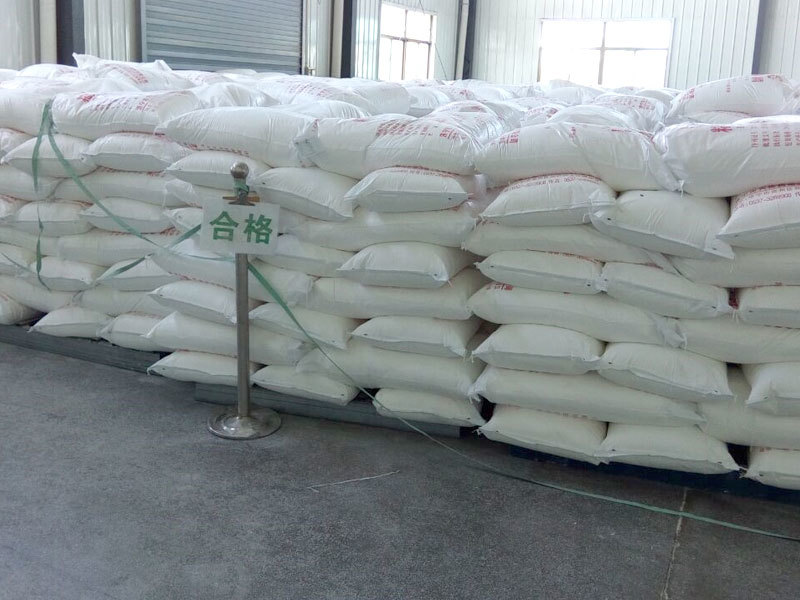
Food-grade sodium carboxymethyl starch (CMS) is a modified starch, using carboxymethyl ether as a raw material, colorless, not easily moldy, and soluble in water. It is applied to various foods, exhibiting various functions such as thickening, floating, emulsification, smoothing, shaping, film-forming, puffing, freshness, acid resistance, and health benefits, with superior performance to CMC (carboxymethyl cellulose), making it a good substitute for CMC. Food-grade sodium carboxymethyl starch is widely used in products such as milk, beverages, frozen foods, fast food, biscuits, and syrups. In addition, food-grade sodium carboxymethyl starch is inert physiologically and has no caloric value, so it can also achieve good results when used in the production of high-calorie foods.
Food-grade sodium carboxymethyl starchWhat is the understanding of sodium carboxymethyl starch materials? Let's take a look together.
In pharmaceutical preparations, other additives besides the main drug can also be called excipients. Binders, fillers, disintegrants, and lubricants for tablets; traditional Chinese medicine pills, wine, vinegar, and fruit juices; the matrix part of semi-solid preparations such as ointments and creams; preservatives, antioxidants, correctors, fragrances, auxiliary solvents, emulsifiers, solubilizers, osmotic pressure regulators, and colorants in liquid preparations can all be called excipients.
The general requirements for excipients are that they are stable in nature, compatible with the main drug, do not produce side effects, do not affect efficacy, are not easily deformed, cracked, or moldy at room temperature, are harmless to insects and humans, have no physiological effects, do not chemically or physically interact with the main drug, and do not affect the determination of the main drug content, etc.
A non-reactive medicinal mixture (such as syrup, lard, liquid petrolatum) to which a medicinally active substance is added or by which other ingredients are bound together. An inert substance that forms part of a drug or antigen (such as syrup, lanolin, or starch); specifically, a substance added to make a mixture viscous for the preparation of pills or tablets, especially when there is a sufficient quantity of liquid in the medicinal mixture.
Previous Page
Related News

Shandong Liujia Pharmaceutical Accessories Co., Ltd. Our company was established in 1997, specializing in the production of pharmaceutical accessories. Our main products are microcrystalline cellulose, magnesium stearate, sodium carboxymethyl starch, pregelatinized starch, starch, dextrin, etc.


Address: Yandian Town Industrial Cluster, Yanzhou District, Yanzhou City, Jining City, Shandong Province, China


©2025 Shandong Liujia Pharmaceutical Excipients Co., Ltd
| SEO| Website construction:CEGLOBAL Business License Privacy Policy